

NIT Motor Grader G5 Guide operator action · technician direction
Motor Grader Dashboard
Warning Lights &
Symbols Explained
warning · gauge · status · operator action · technician diagnosis
A practical G5 guide to reading motor grader dashboard warnings: what the operator should do in the cab, what evidence to record, and where a technician should begin diagnosis.
Read the complete machine condition.
What should you do when a motor grader warning light comes on?
Read the symbol, gauge, message and machine behaviour together. Identify the system first. A brake-pressure or steering warning changes the operating decision immediately; a parking-brake, differential-lock or blade-float indicator may simply confirm a selected machine function. Record the exact indication, machine hours and what the grader was doing. The operator protects the machine and preserves the evidence; the technician confirms the cause.
Read the dashboard correctly
A grader dashboard shows warnings, gauges and status indicators
Earth-moving machinery uses a standard graphical language for many controls and displays. ISO 6405-1 covers common earth-moving-machine symbols, while ISO 6405-2 covers symbols for specific machines, equipment and accessories. [1][2]
Warning
A system needs attention
Examples include abnormal brake pressure, engine oil pressure, steering pressure, charging or excessive temperature.
The strongest operating decision comes from the system identified, the gauge or message beside it and the way the grader is behaving at that moment.
Fast reference
Motor grader warning lights: meaning and first action
This table gives the shortest useful response. The detailed sections below explain why each direction matters.
| Dashboard indication | Operator decision | Technician starts here |
|---|---|---|
| Brake pressure | Stop normal grading and secure the machine. | Measure actual brake-system pressure. |
| Steering / secondary steering | Maintain control and bring the grader to a suitable stop. | Verify primary steering pressure and secondary-steering operation. |
| Transmission / torque-converter temperature | Reduce load and record the operating condition. | Oil, cooling, pressure and transmission operation. |
| Hydraulic oil temperature | Reduce heavy implement use. | Oil, cooler, pressure, flow and internal leakage. |
| Differential oil temperature | Reduce heavy drivetrain loading. | Lubrication, actual temperature and differential condition. |
| Transmission filter / bypass | Record when it appears and report it. | Filter restriction, oil viscosity and pressure circuit. |
| Engine oil pressure | Stop loading the engine and protect it. | Measure actual engine oil pressure. |
| Coolant temperature | Remove heavy load and observe the temperature condition. | Cooling-system performance and measured temperature. |
| Battery / charging | Record the warning and electrical symptoms. | Measure charging voltage and alternator output. |
| Engine-system warning | Record the complete message or code exactly. | Retrieve diagnostic data and verify with physical tests. |
| DEF | Read the accompanying SCR/DEF message. | DEF quantity, quality, sensing and dosing system. |
| DPF / regeneration | Follow the displayed regeneration instruction. | Soot load, pressure/backpressure, temperature and regeneration history. |
On a small screen, swipe horizontally to view the complete table.
Grader-specific priority
Brake pressure and steering warnings change the operating decision first
These two warnings sit high in the operator’s priority because they affect the ability to control and stop the grader. Current motor grader specifications document brake-pressure indication, full-hydraulic steering and secondary-steering systems. [5][6]
Brake-pressure warning
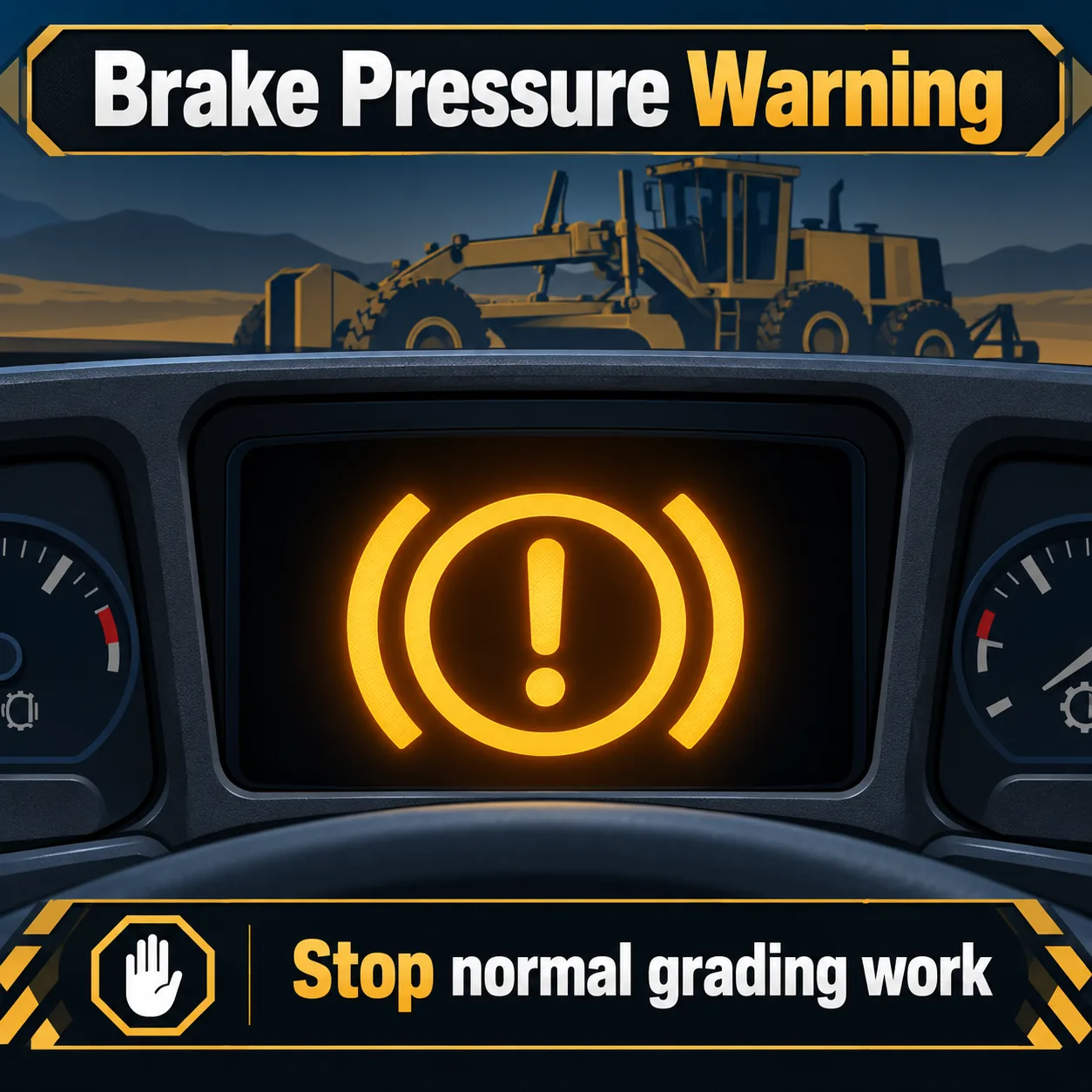
- Operator: stop normal grading work, bring the grader under control and park it in a suitable position.
- Useful evidence: pedal feel, braking response, whether the warning appeared cold or hot, and whether another hydraulic/electrical warning appeared with it.
- Technician: measure actual system pressure, then check pressure supply, fluid or air condition, leakage, accumulators where fitted, valves, pressure sensing and wiring.
- Technical rule: prove the braking condition before condemning the warning circuit.
Steering / secondary-steering warning
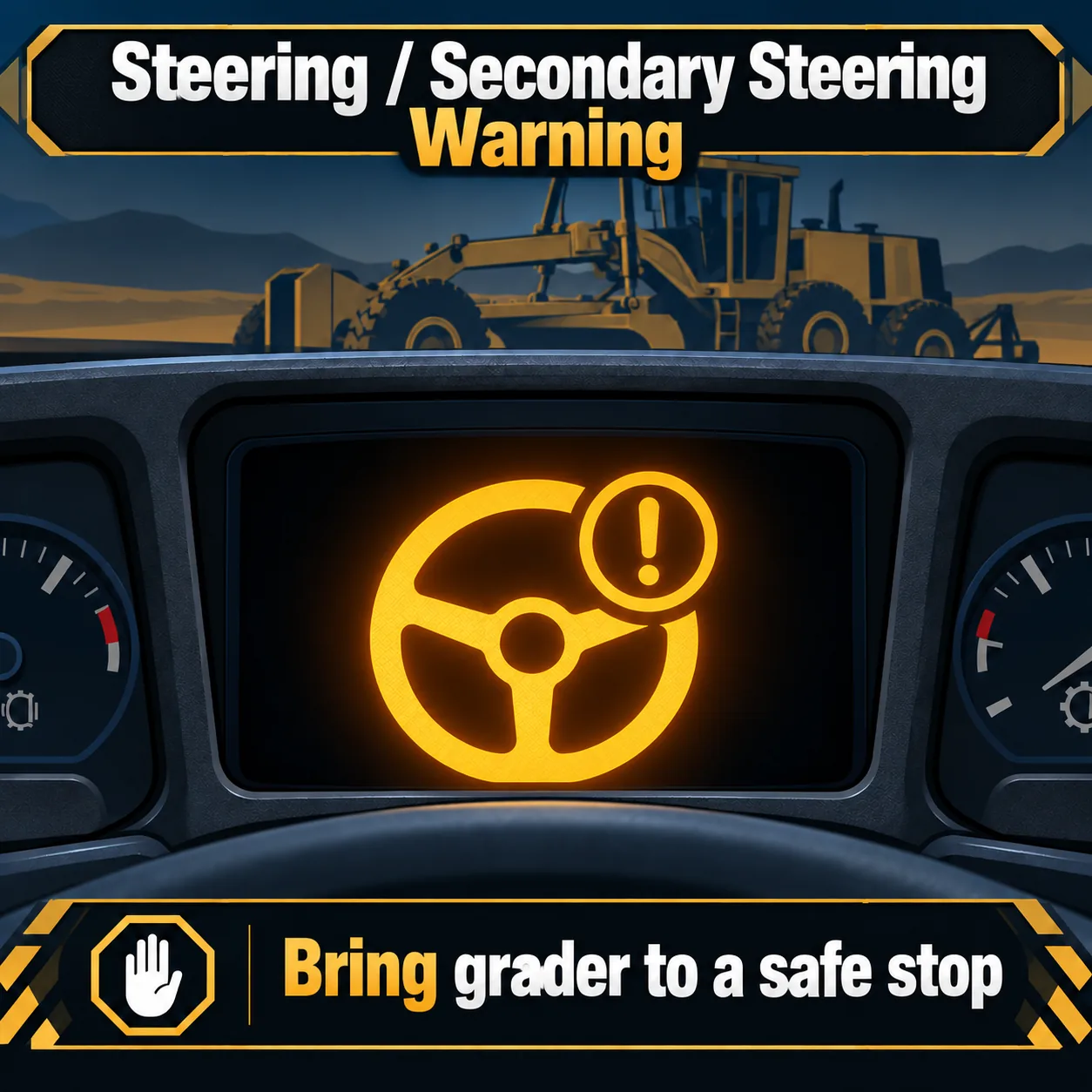
- Operator: stop grading, maintain control and bring the grader to a suitable stopping position.
- Useful evidence: heavy, slow or intermittent steering; steering behaviour changing with engine speed; secondary steering activating.
- Technician: verify hydraulic oil, primary steering pressure, pump, valves, cylinders, sensing and the secondary-steering system.
- Diagnostic question: if secondary steering operated, establish why primary steering pressure dropped. [6]
Heat tells you where load is building
Transmission, hydraulic and differential temperature warnings
Motor graders work under sustained load at low ground speed. Their instrument systems can monitor hydraulic oil, torque-converter or transmission-related conditions and differential oil temperature. [3][4][5]
Transmission / torque converter
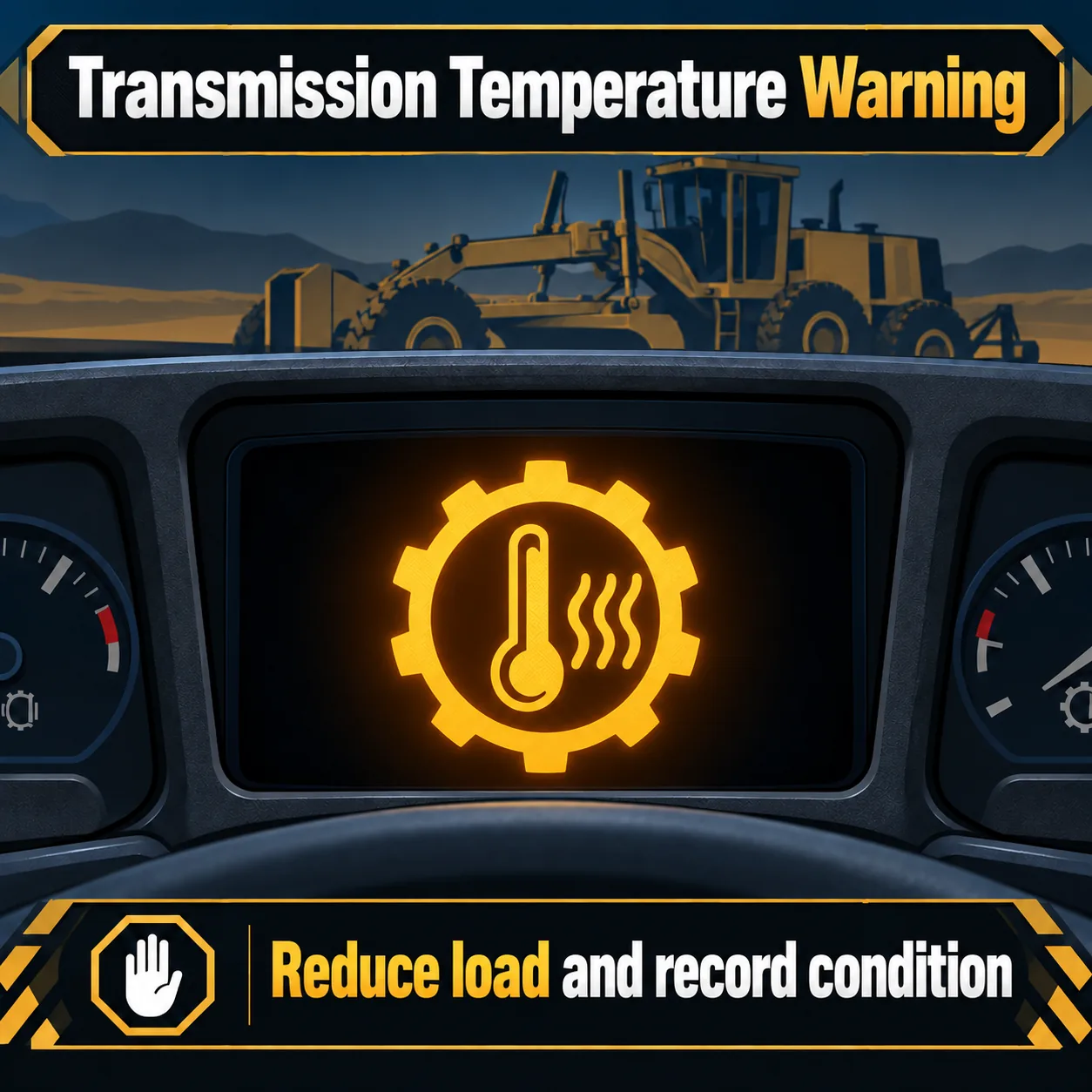
Operator: reduce load and record gear, speed, slope, depth of cut and how long the grader had been working.
Technician: check oil level and condition, filter, cooler, oil flow, pressure, clutch operation, torque converter and temperature sensing.
Repeated heat under normal work needs a cause, not a reset.Hydraulic oil temperature
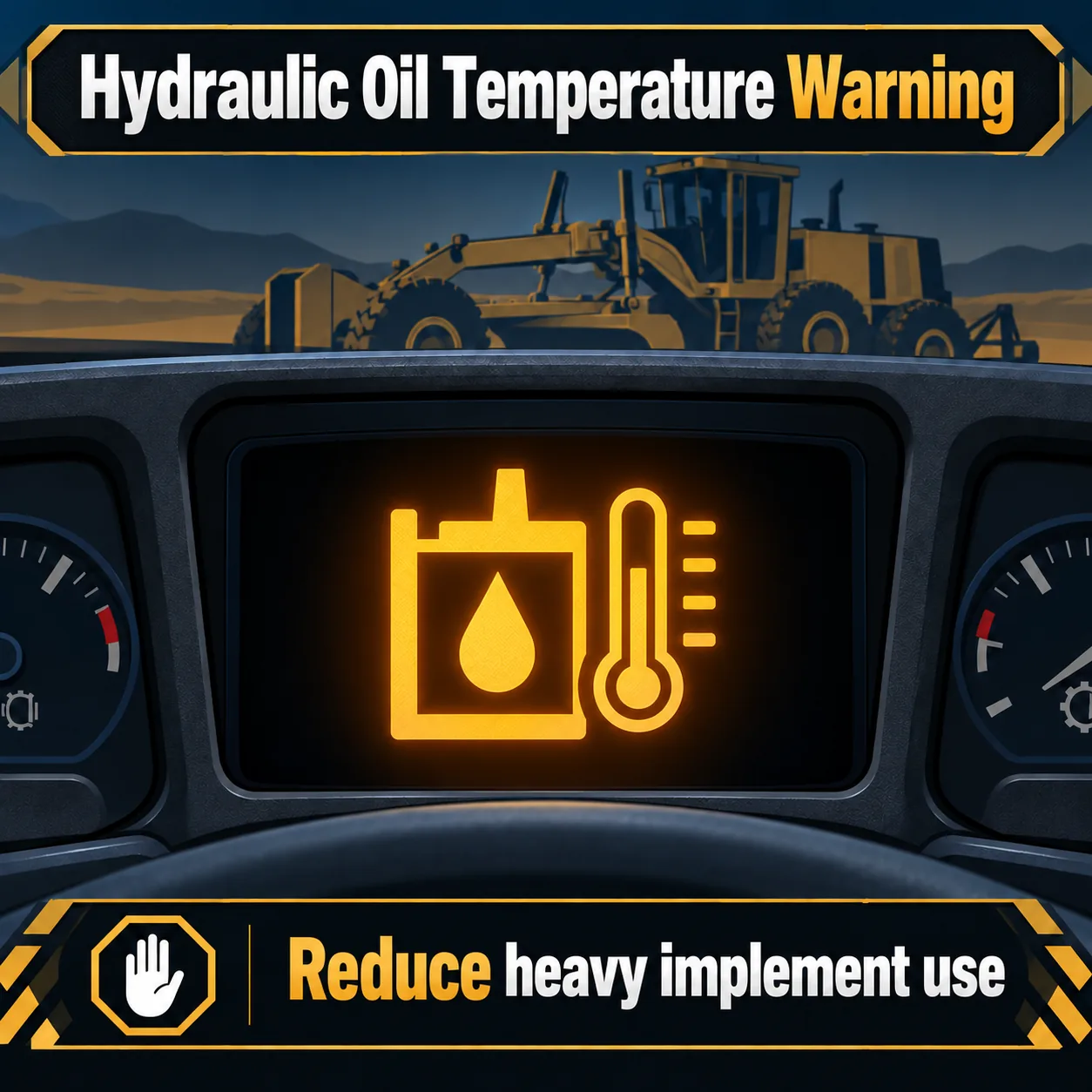
Operator: reduce heavy blade, circle, side-shift, centershift, articulation or ripper/scarifier work and note whether response becomes slow or noisy.
Technician: follow oil level and condition, filters, cooler, airflow, pump, system pressure, valves and internal leakage.
Find where heat is generated or why cooling cannot remove it.Differential / drivetrain temperature
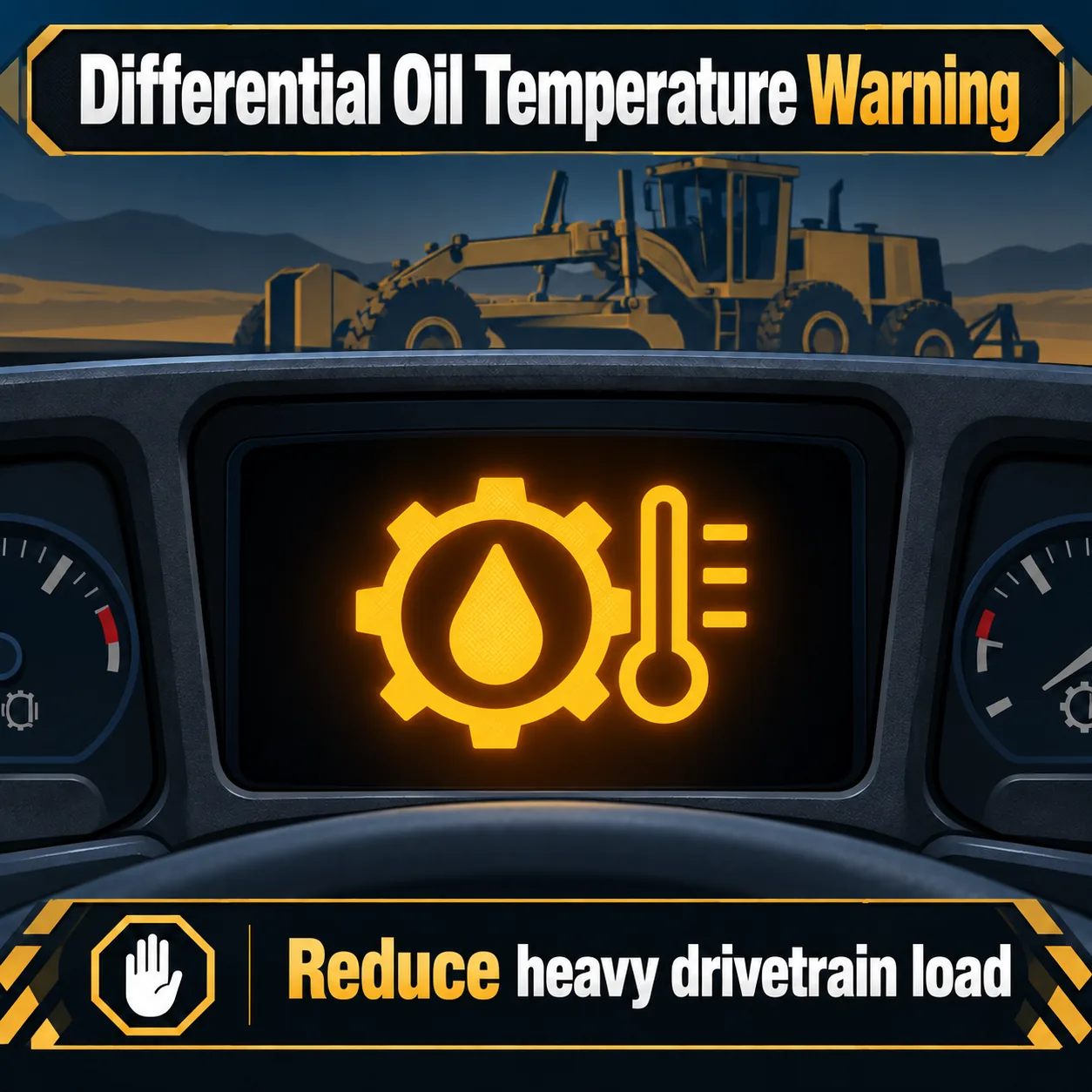
Operator: reduce heavy loading and report prolonged cutting, climbing, travel, unusual rear-drive noise or a hot-oil smell.
Technician: check lubricant quantity and condition, contamination, actual temperature, bearings, gearing, load and the temperature circuit.
Temperature can be the symptom of a lubrication or mechanical-load problem. [5]Hydraulic filter restriction
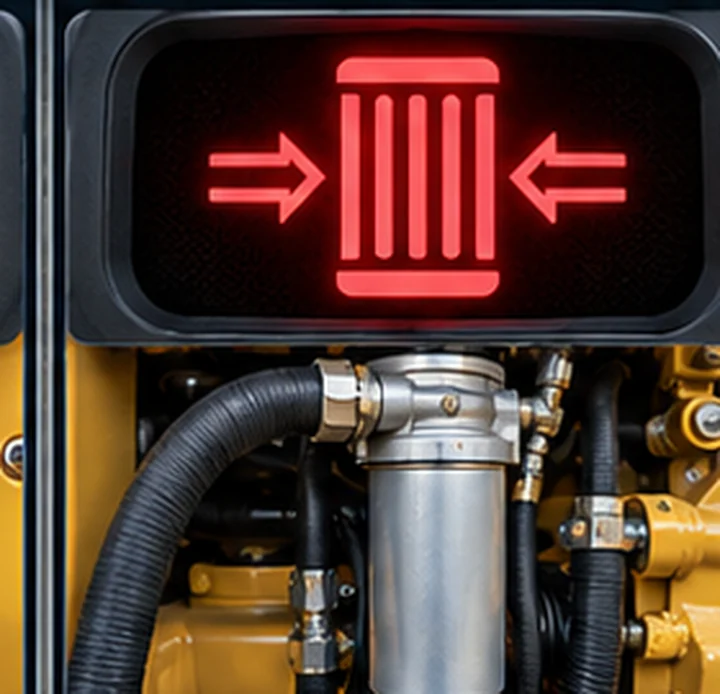
Operator: record the warning and any change in hydraulic response. Technician: inspect filter condition, bypass operation, oil condition and system pressure.
Transmission filter / bypass indication
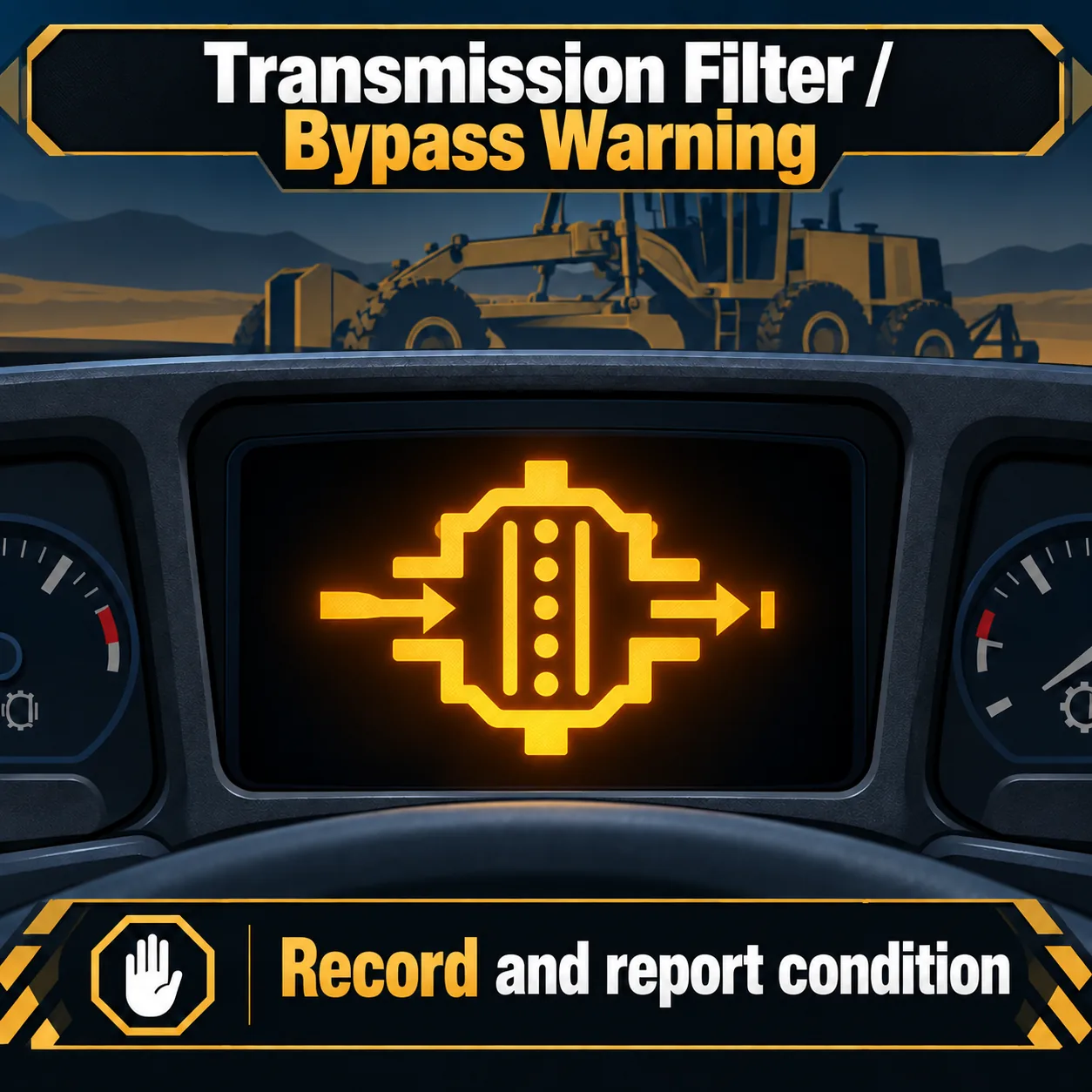
Operator whether it appears only after a cold start or remains after the grader reaches normal temperature.
Technician direction: filter condition → oil viscosity and condition → operating temperature → bypass circuit → transmission pressure → sensing.
Protect the engine and electrical supply
Engine oil pressure, coolant temperature, charging and engine-system warnings
Engine oil pressure
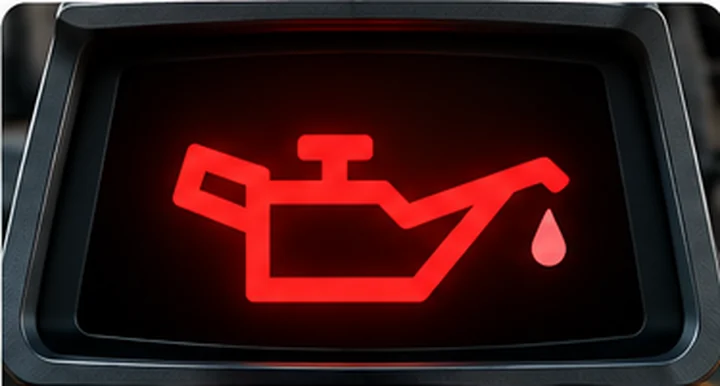
Operator: stop loading the engine and secure the grader.
Technician: measure actual oil pressure, then check oil quantity, condition, filter, pump, lubrication circuit, sender and wiring.
Coolant temperature
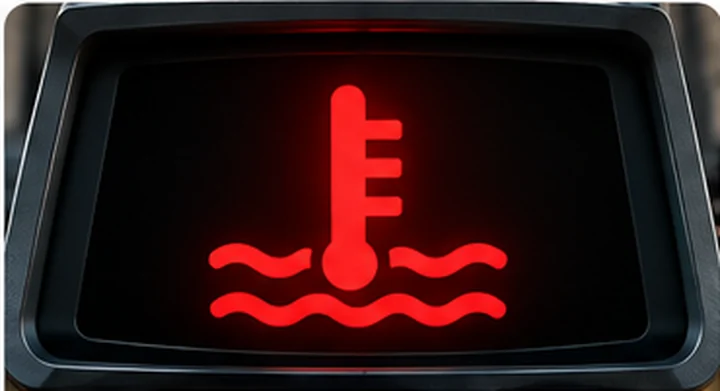
Operator: remove heavy load and note what produced the heat.
Technician: check coolant, leakage, radiator/core, airflow, fan, thermostat, circulation and measured temperature.
Battery / charging
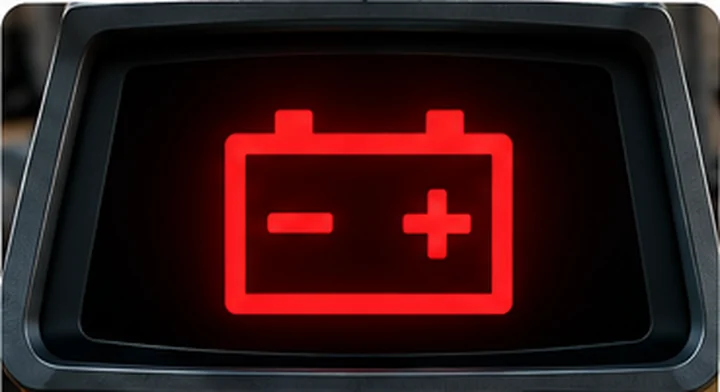
Technician first check: measure charging voltage, then check alternator output, drive, battery condition, terminals, grounds, cables and circuit protection.
Engine-system warning
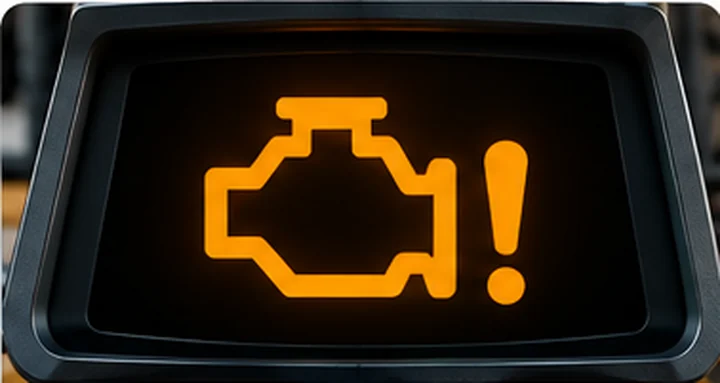
Operator: record the complete display, machine hours and engine behaviour.
Technician: retrieve diagnostic data and confirm the fault with physical measurements.
Air filter restriction

First action: inspect and clean or replace the air-filter element according to the service procedure.
Fuel / water separator
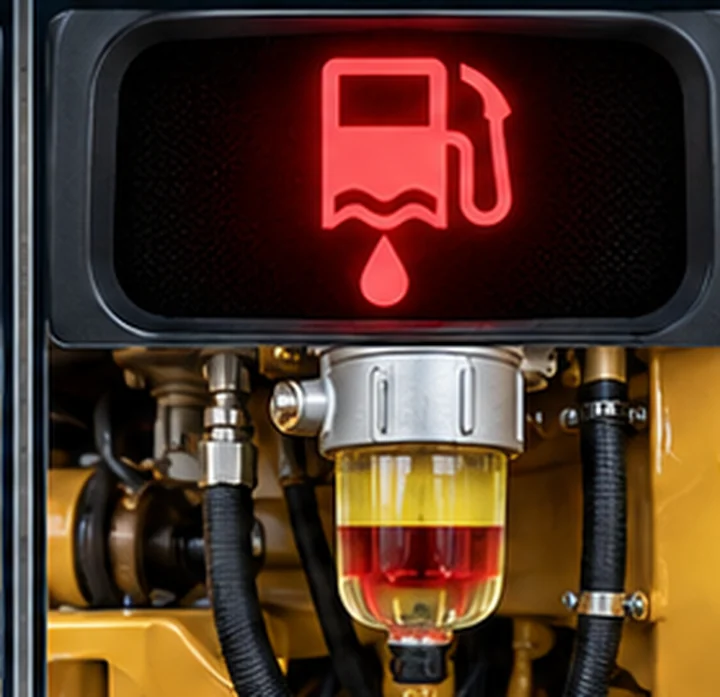
First action: drain the separator using the correct procedure and inspect fuel quality and the fuel system.
Low fuel warning

First action: refuel before the machine runs out of fuel and avoid drawing air into the fuel system.
Wait to start
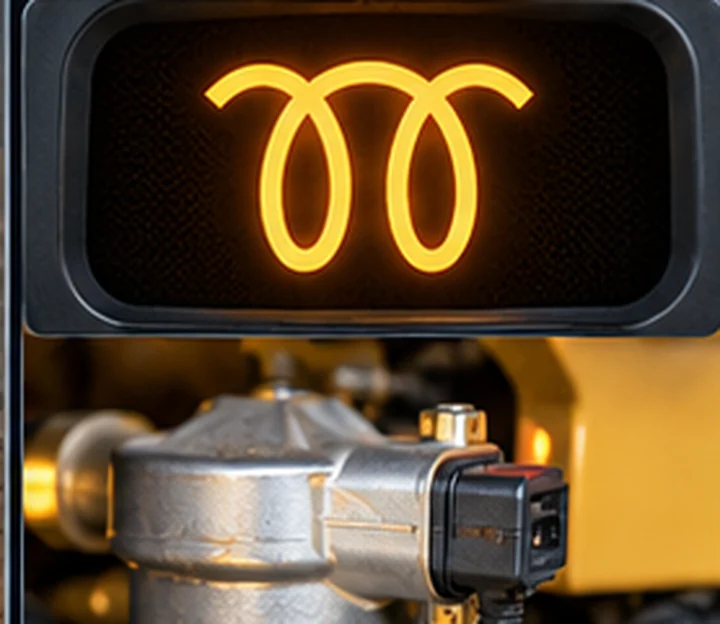
First action: wait for the indicator to clear before starting when the system is active.
Service / maintenance reminder
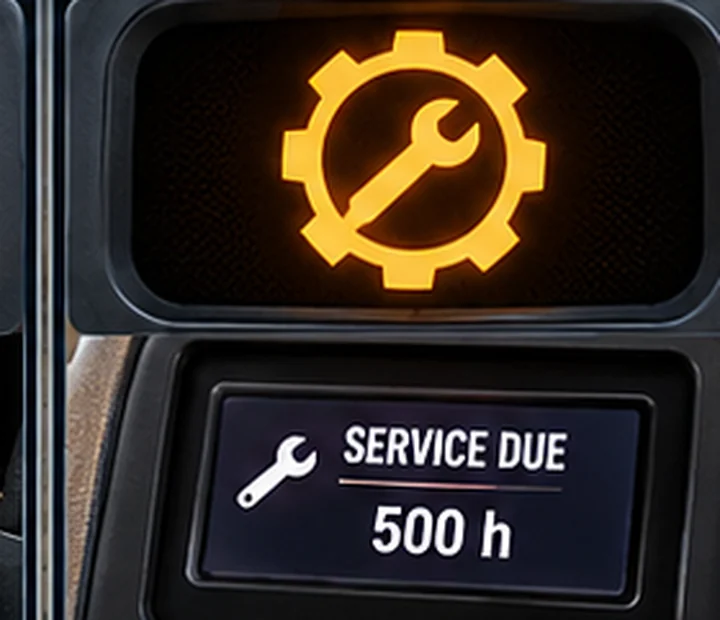
First action: check the service interval and arrange the required maintenance rather than clearing the reminder and continuing indefinitely.
Engine coolant temperature, hydraulic oil temperature, fuel, DEF, articulation and other machine information appear on current grader monitor systems; service menus can also provide diagnostics and machine-status information. [3][4][7]
Oil pressure, temperature and charging warnings become far more useful when the technician compares the actual physical measurement with sensor data and the dashboard display.
Emissions-system messages
DEF and DPF indications need the complete dashboard message
DEF / SCR warning
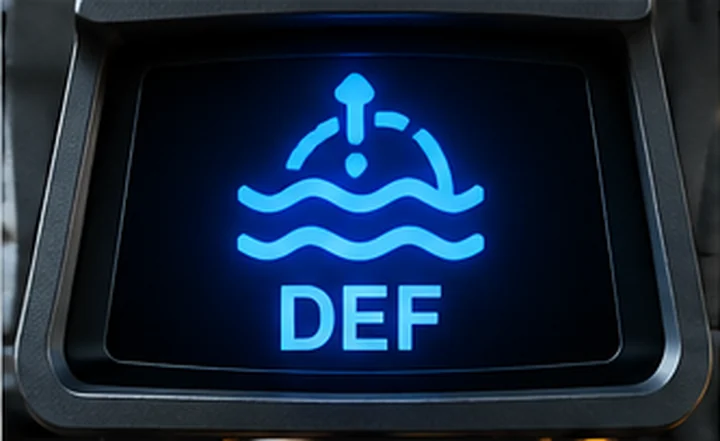
Check DEF level and read the accompanying message. When fluid quantity is correct, diagnosis can move to DEF quality, sensing, lines, dosing components, wiring and SCR data. [3][8]
DPF regeneration required
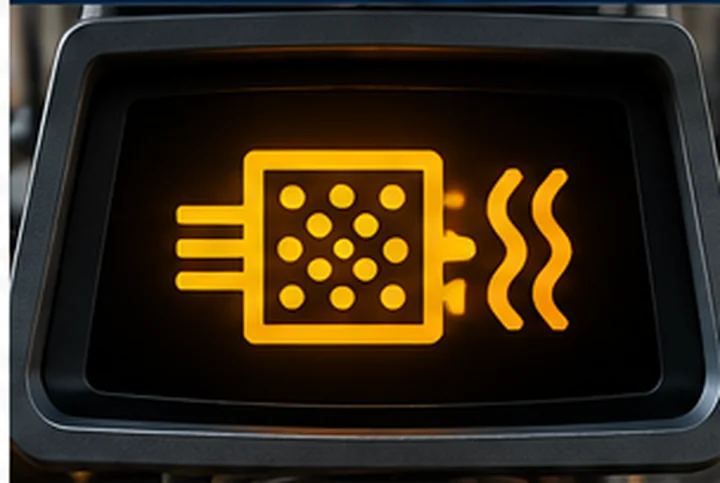
Read whether regeneration is active, requested, inhibited or associated with a fault. Repeated regeneration failure sends the technician toward soot load, exhaust temperature, pressure/backpressure data and regeneration history. [9]
Emissions-system fault
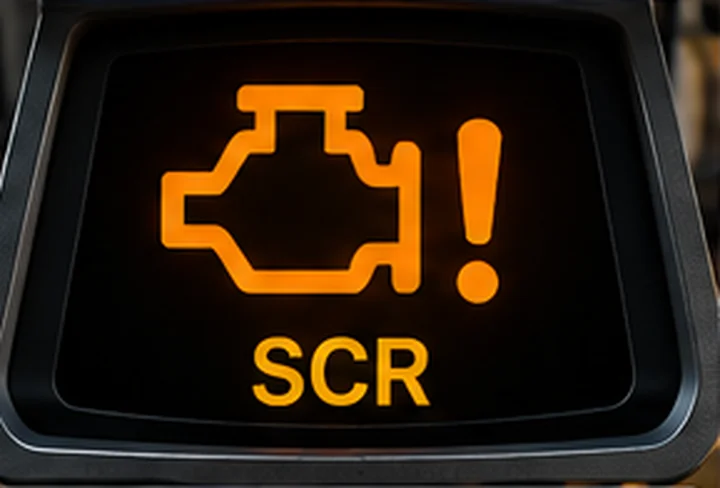
Read the complete displayed message, verify DEF quantity and pass the exact fault information to the technician for SCR and after-treatment diagnosis.
Operating, safety and control status
Know which illuminated symbols describe machine status rather than a fault
Modern grader monitors place operating-status, safety-reminder and machine-mode information beside genuine warnings. A skilled operator recognises the difference and checks for a fault only when the displayed state disagrees with the actual machine condition. [3][5]
High beam

Headlights are on high beam. Switch back when high beam is not needed.
Work lights

Work lamps are on. Switch them off when not required.
Blade float
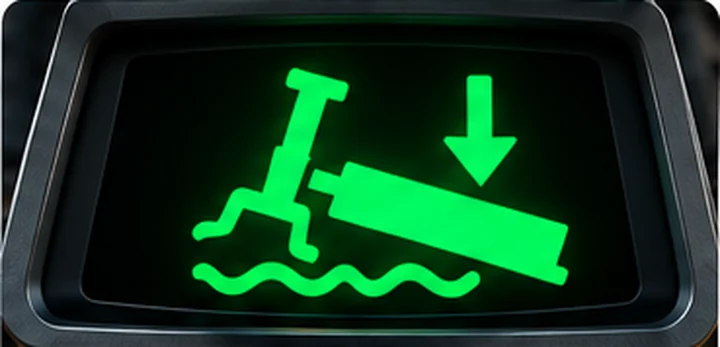
Moldboard float is active. Investigate only when selected status and blade behaviour disagree.
Differential lock

Differential lock is engaged. Disengage when the working condition no longer requires it.
Articulation angle
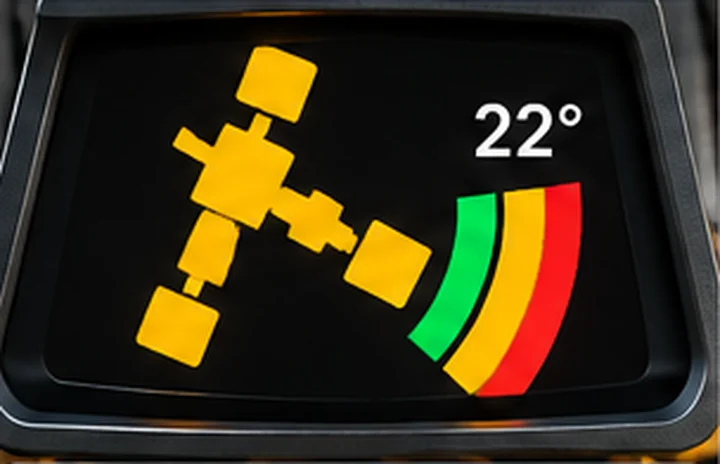
Shows the relationship between front and rear frames; use it to maintain awareness of grader geometry.
Implement lock

Confirms implement controls are locked. Release the lock before operating implements when required.
Centershift / saddle lock

Confirm lock status before repositioning or operating the blade/centershift system.
Cooling fan reverse
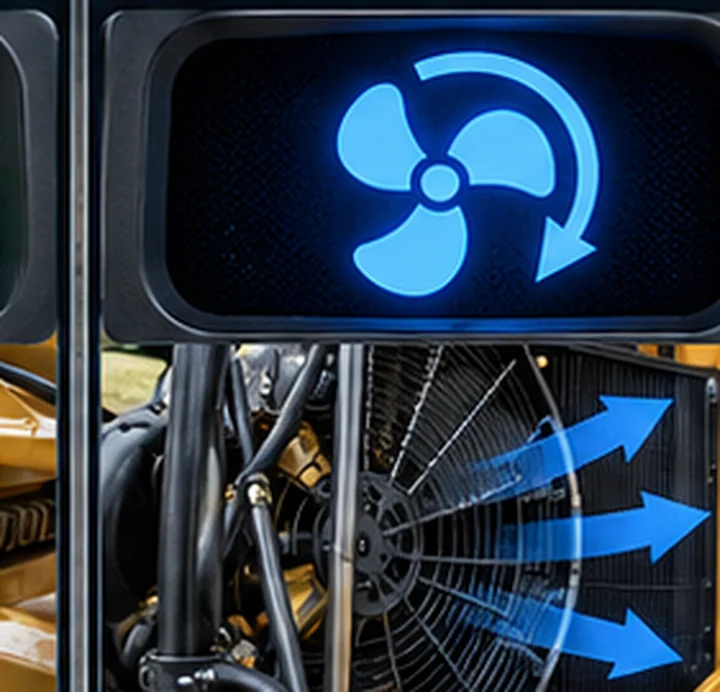
Shows fan reverse mode is active to clear debris from the cooling package.
Operator presence / seat belt
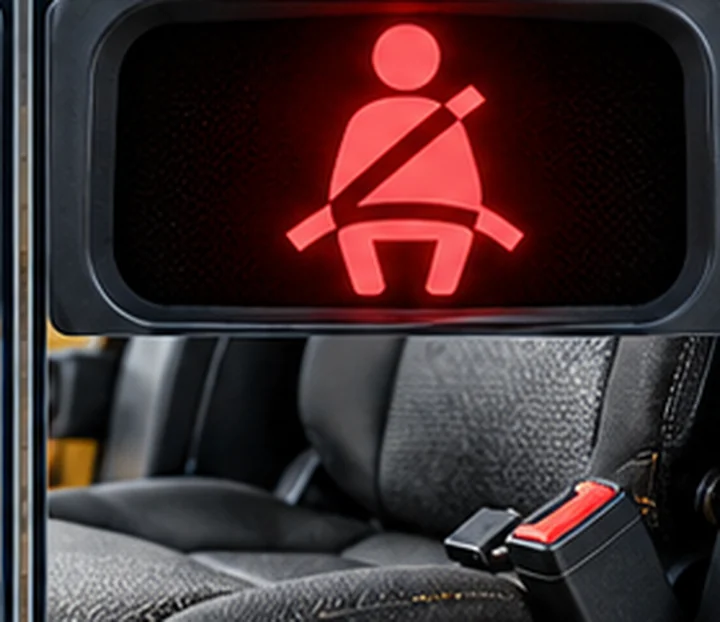
Sit correctly and fasten the seat belt before operating the grader.
Eco / power mode
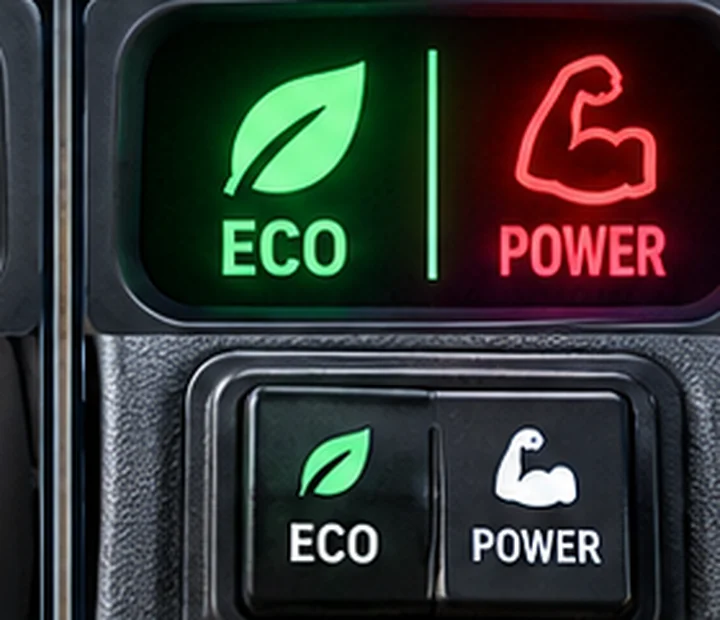
Confirms the selected operating mode. Match the mode to the work being done.
RPM set / throttle hold
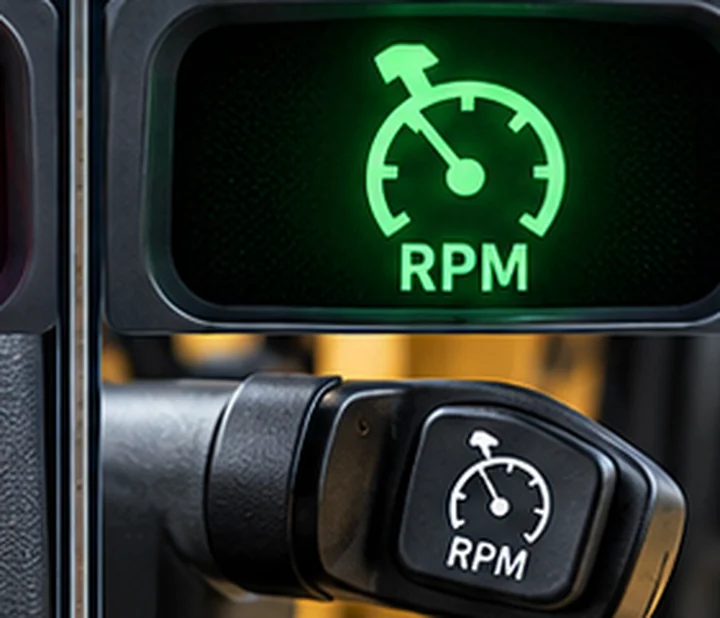
Shows preset engine speed or throttle hold is active. Confirm the setting before continuing.
Preserve the evidence
What the operator should record before the technician arrives
The operator has information that can disappear after the machine cools, restarts or leaves the working condition that produced the warning.
| Record | Example | Why it helps |
|---|---|---|
| Dashboard indication | Brake-pressure warning | Identifies the affected system. |
| Message / code | Exact wording or number displayed | Preserves machine-generated evidence. |
| Machine hours | 6,842 h | Links the event with service and fault history. |
| Work being done | Heavy shoulder grading | Shows the load and operating context. |
| Gear / speed | 3rd gear · low travel speed | Useful for powertrain heat and load analysis. |
| When it appeared | After 25 minutes | Separates cold-start, warm and heat-related faults. |
| Machine behaviour | Steering became heavy | Connects the dashboard warning with a physical symptom. |
| Visible evidence | No external leak seen | Adds a safe visual observation without turning the operator into the repair technician. |
On a small screen, swipe horizontally to compare all three columns.
Technician sequence
Turn the dashboard warning into a physical diagnosis
Confirm
Read the operator report, reproduce the complaint when appropriate and check active warnings, stored information and live machine data.
Inspect
Look at the affected physical system for fluid level, leakage, heat, restriction, damaged wiring, loose connectors or another visible change.
Measure
Measure the relevant pressure, temperature, voltage, signal or other operating value instead of replacing parts from the icon alone.
Compare & test
Compare physical measurement, sensor data and dashboard information; repair the cause and verify under the condition that originally produced the warning.
An oil-pressure warning with genuinely low measured pressure sends the technician into the lubrication system. Normal measured pressure with an abnormal monitor reading sends the investigation toward sensing and electrical input.
Newton Institute of Technology practical demonstration
Teach the symbol by connecting the cab to the physical machine
At Newton Institute of Technology, motor grader dashboard knowledge is most useful when the learner can connect what appears on the monitor with the system that produced it. NIT’s separate Motor Grader Parts and Functions guide covers the mechanical systems behind the machine, while this guide stays focused on dashboard interpretation and operator-to-technician handover. [10]
Brake-pressure warning
- Learner identifies the braking system.
- Learner states the operating decision before any technical diagnosis begins.
- Trainer connects the warning with actual pressure, braking-system components and the warning circuit.
- The student learns the operator side and the technician side of the same dashboard message.
Hydraulic temperature & status indicators
- The learner links hydraulic heat with blade lift, circle, side shift, centershift, articulation and wheel lean.
- The trainer then activates a normal status such as differential lock or blade float.
- The learner distinguishes a genuine warning from an intentionally selected function.
- The exercise finishes with a short defect report that another technician can act on.
The operator should leave the lesson able to recognise the system, make the correct cab decision and report the evidence clearly. The technician-level learner should be able to identify the first physical measurement that confirms or rejects the dashboard indication.
Keep the learning cluster clear
What this guide covers — and where the next guide begins
This article
Symbol → meaning → first action
Motor grader dashboard warnings, status indicators, operator response, evidence capture and first technician diagnostic direction.
Dedicated fault-code guide
Code → SPN/FMI → deeper interpretation
Detailed SPN/FMI decoding, ECU/controller code structures and manufacturer-specific code tables should remain in a separate motor grader fault-code article rather than being mixed into this warning-symbol guide.
For full grader component familiarisation use NIT’s Motor Grader Parts and Functions guide. For blade control, road profile and practical G5 operating skill use Motor Grader Training in Kenya. For whole-machine checks before work, use the Plant Operator Pre-Start Inspection Checklist. [10][11][12]
Quick reference
Motor grader warning-light FAQs
What warning lights should a motor grader operator take most seriously?
Brake pressure, steering, engine oil pressure and excessive system-temperature warnings deserve immediate attention because they affect machine control or major mechanical systems.
What does the oil-can symbol mean on a motor grader?
It identifies the engine lubrication or oil-pressure system. Protect the engine first; the technician should then verify actual oil pressure before moving to the sensor and electrical circuit.
What does the thermometer symbol mean?
Identify the system beside the temperature indication. A grader can monitor engine coolant, hydraulic oil, transmission or torque-converter oil and differential temperature separately.
What does the battery symbol mean?
It points toward the charging system. The first useful technician check is charging voltage and alternator output, followed by batteries, cables, grounds and circuit protection.
What does a steering warning mean on a grader?
It identifies a steering-system condition. On graders with secondary steering, the backup system can provide steering assistance after primary steering pressure drops so the machine can be brought to a stop. [6]
Is differential lock a fault light?
Normally it is a status indicator confirming that differential lock is engaged. Investigate when the displayed state and actual drivetrain behaviour disagree.
What does blade float mean?
It confirms that the moldboard float function is active. If the selected mode and actual blade response disagree, the control or hydraulic system needs checking.
What does the DEF light mean?
It identifies DEF/SCR system information. Read the accompanying message to determine whether the condition concerns fluid level, fluid quality, sensing or SCR system operation.
What does the DPF symbol mean?
It relates to particulate-filter loading and regeneration. The accompanying message tells the operator whether regeneration is occurring, requested, inhibited or associated with a fault.
Can a motor grader continue working when a warning appears?
The answer depends on the system. Identify the warning first. Brake pressure, steering and engine oil pressure require a different operating decision from a normal parking-brake, differential-lock or blade-float indicator.
Should an operator clear fault codes?
The operator’s useful job is to record the displayed information accurately and report the operating condition. Detailed fault-code decoding and clearing belongs to the technical diagnostic process.
Remember the sequence
Operator recognises and records. Technician measures and confirms.
Operator: identify the system · control the grader · record the exact indication · describe the operating condition · report clearly. Technician: confirm the complaint · inspect the system · measure the physical condition · compare with electronic data · repair the cause · test the grader.
Continue learning
Related Newton Institute of Technology guides
Learn the machine beyond the controls
Register for Motor Grader & Plant Operator Training at Newton Institute of Technology
Build practical skills in machine familiarisation, controls, blade operation, positioning, dashboard awareness, pre-start checks and clear fault reporting through NIT’s hands-on Plant Operator training.
CoursePlant Operator · Motor Grader G5
Training format2 months · 70% practical / 30% theory
IntakeMonthly · Migori Town
Technical references
- International Organization for Standardization. ISO 6405-1:2017 — Earth-moving machinery — Symbols for operator controls and other displays — Part 1: Common symbols. Current edition confirmed in 2022. ISO.
- International Organization for Standardization. ISO 6405-2:2017 — Earth-moving machinery — Symbols for operator controls and other displays — Part 2: Symbols for specific machines, equipment and accessories. ISO.
- Caterpillar. Get to Know Your 120 Motor Grader Monitor. Documents differential lock, parking brake, hydraulic-oil temperature, coolant temperature, DEF, blade slope, articulation angle and diagnostic/troubleshooting access. Official technical article.
- Caterpillar. Introducing Your 140, 150 or 160 Motor Grader Monitor. Documents hydraulic-oil temperature, coolant temperature, DEF level, articulation angle, gear/speed information and monitor alert behaviour. Official technical article.
- Komatsu. GD655-7 Motor Grader specifications. Lists indicator functions including battery charge, blade float, brake oil pressure, differential lock, differential oil temperature, engine oil pressure, parking brake and transmission-system indication. Official specifications.
- Caterpillar. 16 Motor Grader — Secondary Steering System. Documents automatic engagement of an electric hydraulic pump after a drop in steering pressure so the operator can steer the machine to a stop. Official specifications.
- Caterpillar. More 120 Motor Grader Monitor Features. Documents monitor service functions including diagnostics, calibrations, service tests, ECM summary information and machine-status data. Official technical article.
- U.S. Environmental Protection Agency. Diesel Exhaust Fluid. Technical information on DEF/SCR systems and monitored DEF-related conditions. EPA.
- U.S. Environmental Protection Agency. Diesel Particulate Filter Operation and Maintenance. Explains particulate accumulation, exhaust backpressure, regeneration and operator/service response to DPF alerts. EPA technical document.
- Newton Institute of Technology. Motor Grader Parts and Functions: G5 Operator Guide. Dedicated guide to grader working equipment, steering geometry, tandem drive, engine, hydraulics and operator-level machine familiarisation. niteducation.com.
- Newton Institute of Technology. Motor Grader Training in Kenya: G5 Requirements, Skills & Duration. Practical guide to grader operation, blade control, material movement and G5 training. niteducation.com.
- Newton Institute of Technology. Plant Operator Pre-Start Inspection Checklist Kenya. Dedicated whole-machine inspection route before equipment goes to work. niteducation.com.
Prepared by: Newton Institute of Technology Editorial Team · Institutional / Technical review: Engineer Simon Barongo · Last reviewed: 20 October 2026.
Continue the conversation
Questions and comments
Ask about this guide or share a useful experience. No account is required.