

Hairdressing & Beauty Therapy Guide 2026
Best Hairdressing and Beauty Therapy Courses in Kenya
A practical guide to choosing the right beauty course, building salon-ready skills and planning your next career step.
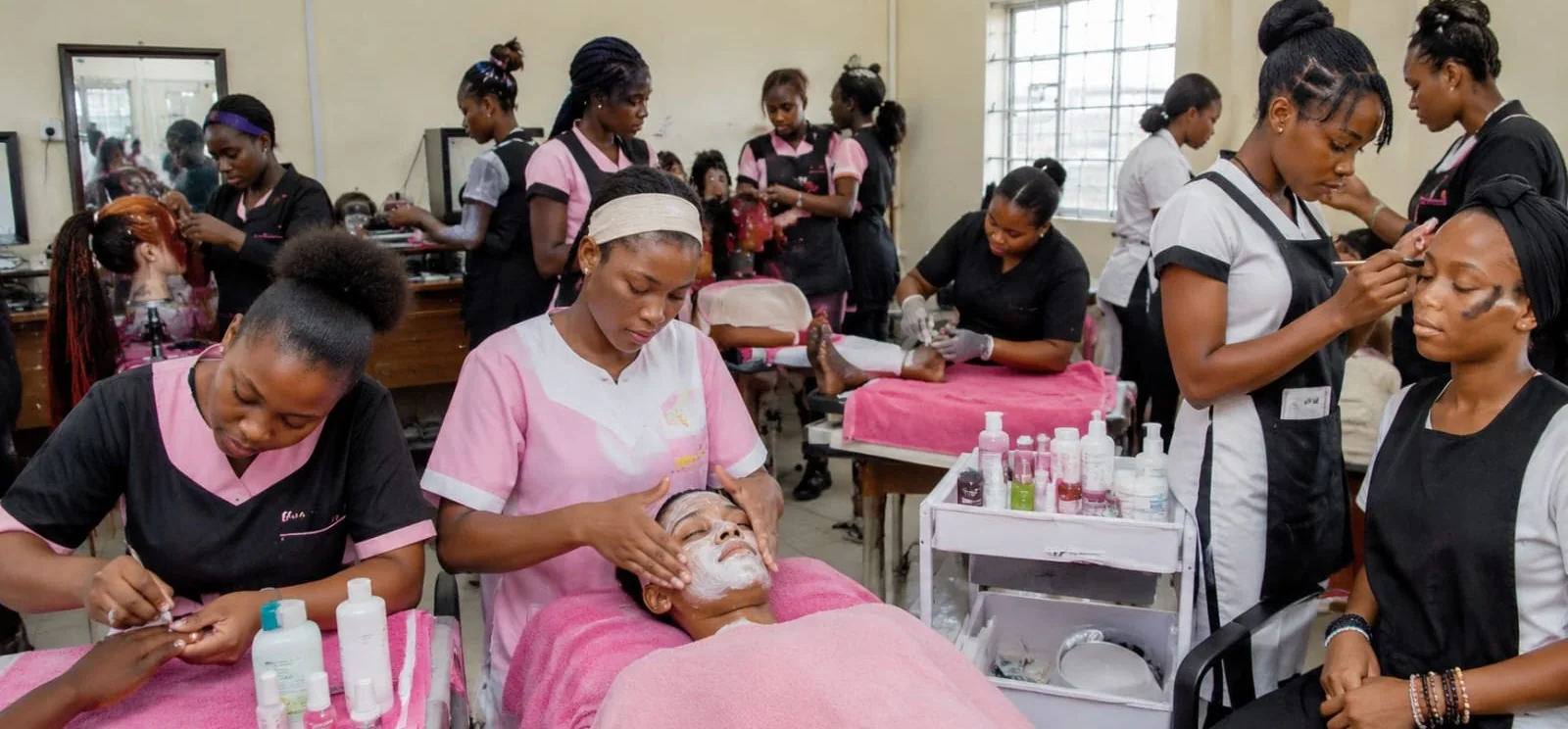
Newton Institute of Technology in Migori offers broad programmes and focused short courses. Beginners can build a foundation, while people already working in salons can add a new service without repeating an entire programme.
Choose the course by the service you want to provide—not by the course name that sounds most impressive.
Course information at a glance
Beauty and wellness training close to learners in Migori and surrounding counties.
Demonstrations, guided practice, tool handling, hygiene and service delivery.
Confirm the next class start date and timetable with the Admissions Office.
Relevant preparation is available for selected trade-test programmes.
Main hairdressing and beauty therapy courses at NIT
These durations match the Beauty and Wellness courses currently shown by NIT. Ask the Admissions Office to confirm the next intake, timetable and current fees before enrolling.
| Programme | Current duration | Best suited for |
|---|---|---|
| Cosmetology | 12 months, full-time | Learners who want a wide range of salon and spa skills. |
| Hairdressing | 6–9 months, full-time | Future hairstylists, salon professionals and hair-business owners. |
| Beauty Therapy | 6–9 months, full-time | Learners interested in skincare, facials, body treatments and spa services. |
| Nail Technology | 2 months, full-time | People who want to offer manicure, pedicure, gel, acrylic and nail-art services. |
| Professional Barbering | 2 months, full-time | Learners focused on cutting, fades, shaving, beard care and men’s grooming. |
Swipe horizontally to view the complete table on a small screen.
Focused short courses
A short course makes sense when you want one service you can practise, improve and sell. It can also help a working stylist add a new income stream.
| Course | Current duration |
|---|---|
| Dreadlocks and Microlocks | 2 months |
| Makeup Artistry | 2 months, part-time |
| Skincare and Facial Treatments | 2 months, full-time |
| Massage Therapy | 2 months, full-time |
| Spa Management | 2 months, full-time |
| Microblading | 1 month, intensive |
| Laser Hair Removal | 1 month, intensive |
| Eyebrow and Eyelash Extension | 1 month, intensive |
| Aromatherapy | 1 month, part-time |
Swipe horizontally to view the complete table on a small screen.
What each course prepares you to do
Hairdressing
Hairdressing suits a learner who enjoys working with texture, shape and colour. Training covers the daily services clients expect in a professional salon.
Core skills include shampooing, conditioning, cutting, blow-drying, braiding, weaving, relaxing, colouring, extensions, dreadlocks, scalp care and finishing. Client consultation and workstation hygiene matter just as much as the final style.
Career options: salon stylist, hair-care assistant, mobile hairstylist, salon supervisor and independent salon owner.
Beauty Therapy
Beauty therapy is centred on skin, body care and client wellbeing. It is a good fit for learners who see themselves in a salon, spa, hotel or wellness setting.
The course may cover skin analysis, facials, cleansing, exfoliation, massage, waxing, eyebrow shaping, eyelash care, makeup, body treatments and infection-control procedures.
Career options: beauty therapist, spa attendant, skincare consultant or self-employed service provider.
Cosmetology
Cosmetology brings hair, skin and nail services together. It suits someone who prefers range rather than one narrow speciality.
Because the programme is broader, it takes longer. The advantage is flexibility: a graduate can serve more clients, manage several sections of a salon or build a business with multiple services.
Nail Technology
Nail technology is focused and quick to apply in the market. It covers manicure, pedicure, nail shaping, cuticle care, gel and acrylic application, extensions, nail art, sanitation and after-care advice.
A trained nail technician may work in a salon or spa, run a nail bar, visit clients at home or add nail services to an existing beauty business.
Professional Barbering
Barbering requires steady hands, clean tools and an eye for detail. Learners practise clipper control, fades, line-ups, shaving, beard shaping, scalp care and client consultation.
The course can lead to work in a barber shop, hotel grooming unit or a personal barbering business.
What good beauty training should include
Beauty work is visible. A client can tell when a practitioner is confident, clean, organised and honest about what a service can achieve.
Handle tools, prepare a workstation and complete services repeatedly—not only watch demonstrations.
Clean towels, disinfected tools, safe product use, patch testing and correct waste handling.
Ask the right questions, check hair or skin condition and explain realistic results.
Pricing, stock control, appointment records, customer care, marketing and basic bookkeeping.
Ask to see a practical lesson. A busy, well-organised training room often tells you more than a long brochure.
Career opportunities after training
A beauty qualification can lead to employment, freelance work or a small business. Many graduates combine the three while building a client base.
- Professional hairstylist or mobile hairdresser
- Beauty or spa therapist
- Nail technician or nail-studio owner
- Barber or grooming specialist
- Makeup artist for bridal, studio and event work
- Salon or spa supervisor
- Beauty-product sales or consultation
- Independent salon, spa or mobile beauty-business owner
A learner can begin with home appointments, mobile services or a rented salon chair. The important step is to keep records, price services properly and maintain the same hygiene standard wherever the work is done.
How to choose a good beauty college in Kenya
Do not choose a college from an advert alone. Check the training behind the promise.
Check registration
Confirm that the institution is registered with TVETA and that the programme is offered through an approved training arrangement.
Ask about the examination
For a trade-test course, request the exact NITA level, examination process and registration dates before paying fees.
Visit the practical room
Look at the workstations, tools, water supply, mirrors, treatment beds, sterilisation arrangements and learner-to-equipment ratio.
Meet the trainer
Ask who teaches the course, how long they have worked in the industry and whether they still practise current techniques.
Confirm the kit
Find out what the school provides and what you must buy. A clear list prevents surprise costs after admission.
Look beyond technique
A useful course should include hygiene, customer care, pricing and simple business management.
Why study at Newton Institute of Technology?
- NIT trains learners in practical beauty and wellness environments rather than relying on theory alone.
- The course range allows a learner to begin with one marketable skill or take a broader cosmetology pathway.
- Training includes professional conduct, customer care, hygiene and basic entrepreneurship alongside technical practice.
- The institute is based in Migori Town, making formal beauty training more accessible to learners in Migori and the surrounding counties.
NITA pathways and examination arrangements depend on the trade and level. Ask for the exact assessment name in writing before enrolment.
Frequently asked questions
Which course is best for a beginner?
Hairdressing or Beauty Therapy gives a clear professional foundation. Choose Cosmetology when you want to combine hair, skin and nail services.
Can I take a short course and start working?
Yes. A focused course such as Nail Technology, Barbering or Makeup Artistry can lead to entry-level work or self-employment. Regular practice and strong hygiene habits remain essential.
Do the courses prepare learners for NITA examinations?
Selected trade-test programmes prepare learners for the relevant NITA assessment. Confirm the exact programme, level and examination window with the Admissions Office.
What are the entry requirements?
Requirements vary by course and assessment level. School leavers, adults and working salon staff may apply. The Admissions Office confirms the documents needed for each programme.
Are the courses practical?
Yes. The training is built around demonstrations, guided practice, tool handling, salon hygiene and service delivery.
Can a graduate open a salon or beauty business?
Yes. Many beauty services can be offered through a salon, a home studio or a mobile business. Training in pricing, stock, customer care and record keeping helps the business side.
When can I apply?
Applications are accepted throughout the year. Contact NIT to confirm the next class start date and current fee structure.
Your next step
Apply or request career guidance
Not sure whether to choose Hairdressing, Beauty Therapy, Cosmetology, Nail Technology or Barbering? Speak to the admissions team before enrolling. A short career-guidance conversation can save you from choosing a course that does not match your goals, schedule or budget.
Along Migori–Sirare Highway, Namba Area, approximately 0.3 km opposite Rubis Filling Station, Migori Town, Migori County.
Ask about the next class start date, timetable and programme choice.